
File Drawer Problem
File Drawer Problem - Some things to consider when deciding to publish results are: Do the results agree with the expectations of the researcher or sponsor? Such a selection process increases the likelihood that published results reflect type i errors rather than true population parameters, biasing effect sizes upwards. Web studies that yield nonsignificant or negative results are said to be put in a file drawer instead of being published. It describes the tendency of researchers to publish positive results much more readily than negative results, which “end up in the researcher’s drawer.” Web the file drawer problem (or publication bias) refers to the selective reporting of scientific findings. Are the results practically significant? This term suggests that results not supporting the hypotheses of researchers often go no further than the researchers' file drawers, leading to a bias in published research. Web selective reporting of scientific findings is often referred to as the “file drawer” problem. It describes the tendency of researchers to publish positive results much more readily than negative results, which “end up in the researcher’s drawer.” Are the results practically significant? Web publication bias is also called the file drawer problem, especially when the nature of the bias is that studies which fail to reject the null hypothesis (i.e., that do not produce a statistically significant result) are less likely to be published than those that do produce a statistically significant result. It describes the tendency of researchers to publish positive results much more readily than negative results, which “end up in the researcher’s drawer.” Failure to report all the findings of a clinical trial breaks the core value of honesty, trustworthiness and integrity of the researchers. Web the file drawer problem reflects the influence of the results of a study on whether the study is published. Web the file drawer problem (or publication bias) refers to the selective reporting of scientific findings. Web in 1979, robert rosenthal coined the term “file drawer problem” to describe the tendency of researchers to publish positive results much more readily than negative results, skewing our ability to discern exactly what an accumulating body of knowledge actually means [1]. Such a selection process increases the likelihood that published results reflect type i errors rather than true population parameters, biasing effect sizes upwards. It describes the tendency of researchers to publish positive results much more readily than negative results, which “end up in the researcher’s drawer.” Web the file drawer problem is a phenomenon wherein studies with significant results are more likely to be published (rothstein, 2008 ), which can result in an inaccurate representation of the effects of interest. Are the results statistically significant? It describes the tendency of researchers to publish positive results much more readily than negative results, which “end up in the researcher’s drawer.” Do the results agree with the expectations of the researcher or sponsor? Failure to report all the findings of a clinical trial breaks the core value of honesty, trustworthiness and integrity of. It describes the tendency of researchers to publish positive results much more readily than negative results, which “end up in the researcher’s drawer.” It describes the tendency of researchers to publish positive results much more readily than negative results, which “end up in the researcher’s drawer.” Some things to consider when deciding to publish results are: Web in 1979, robert. It describes the tendency of researchers to publish positive results much more readily than negative results, which “end up in the researcher’s drawer.” Web the file drawer problem is a phenomenon wherein studies with significant results are more likely to be published (rothstein, 2008 ), which can result in an inaccurate representation of the effects of interest. Web in 1979,. Are the results statistically significant? Web the file drawer problem (or publication bias) refers to the selective reporting of scientific findings. Web publication bias is also called the file drawer problem, especially when the nature of the bias is that studies which fail to reject the null hypothesis (i.e., that do not produce a statistically significant result) are less likely. This term suggests that results not supporting the hypotheses of researchers often go no further than the researchers' file drawers, leading to a bias in published research. Web publication bias is also called the file drawer problem, especially when the nature of the bias is that studies which fail to reject the null hypothesis (i.e., that do not produce a. Web the file drawer problem (or publication bias) refers to the selective reporting of scientific findings. Web the file drawer problem reflects the influence of the results of a study on whether the study is published. Are the results statistically significant? Web publication bias is also called the file drawer problem, especially when the nature of the bias is that. Web the file drawer problem reflects the influence of the results of a study on whether the study is published. Web the file drawer problem is a phenomenon wherein studies with significant results are more likely to be published (rothstein, 2008 ), which can result in an inaccurate representation of the effects of interest. Are the results practically significant? Web. Some things to consider when deciding to publish results are: Web selective reporting of scientific findings is often referred to as the “file drawer” problem. Web in 1979, robert rosenthal coined the term “file drawer problem” to describe the tendency of researchers to publish positive results much more readily than negative results, skewing our ability to discern exactly what an. Failure to report all the findings of a clinical trial breaks the core value of honesty, trustworthiness and integrity of the researchers. Web the file drawer problem is a phenomenon wherein studies with significant results are more likely to be published (rothstein, 2008 ), which can result in an inaccurate representation of the effects of interest. It describes the tendency. Web the file drawer problem is a phenomenon wherein studies with significant results are more likely to be published (rothstein, 2008 ), which can result in an inaccurate representation of the effects of interest. Are the results practically significant? Web the file drawer problem (or publication bias) refers to the selective reporting of scientific findings. This term suggests that results. Web selective reporting of scientific findings is often referred to as the “file drawer” problem. Web in 1979, robert rosenthal coined the term “file drawer problem” to describe the tendency of researchers to publish positive results much more readily than negative results, skewing our ability to discern exactly what an accumulating body of knowledge actually means [1]. Failure to report all the findings of a clinical trial breaks the core value of honesty, trustworthiness and integrity of the researchers. Some things to consider when deciding to publish results are: Such a selection process increases the likelihood that published results reflect type i errors rather than true population parameters, biasing effect sizes upwards. It describes the tendency of researchers to publish positive results much more readily than negative results, which “end up in the researcher’s drawer.” Web the file drawer problem reflects the influence of the results of a study on whether the study is published. Do the results agree with the expectations of the researcher or sponsor? Are the results practically significant? It describes the tendency of researchers to publish positive results much more readily than negative results, which “end up in the researcher’s drawer.” Web studies that yield nonsignificant or negative results are said to be put in a file drawer instead of being published. Web publication bias is also called the file drawer problem, especially when the nature of the bias is that studies which fail to reject the null hypothesis (i.e., that do not produce a statistically significant result) are less likely to be published than those that do produce a statistically significant result. Web the file drawer problem (or publication bias) refers to the selective reporting of scientific findings.
Reporting all results efficiently A RARE proposal to open up the file

13. "Negative Data" and the File Drawer Problem YouTube
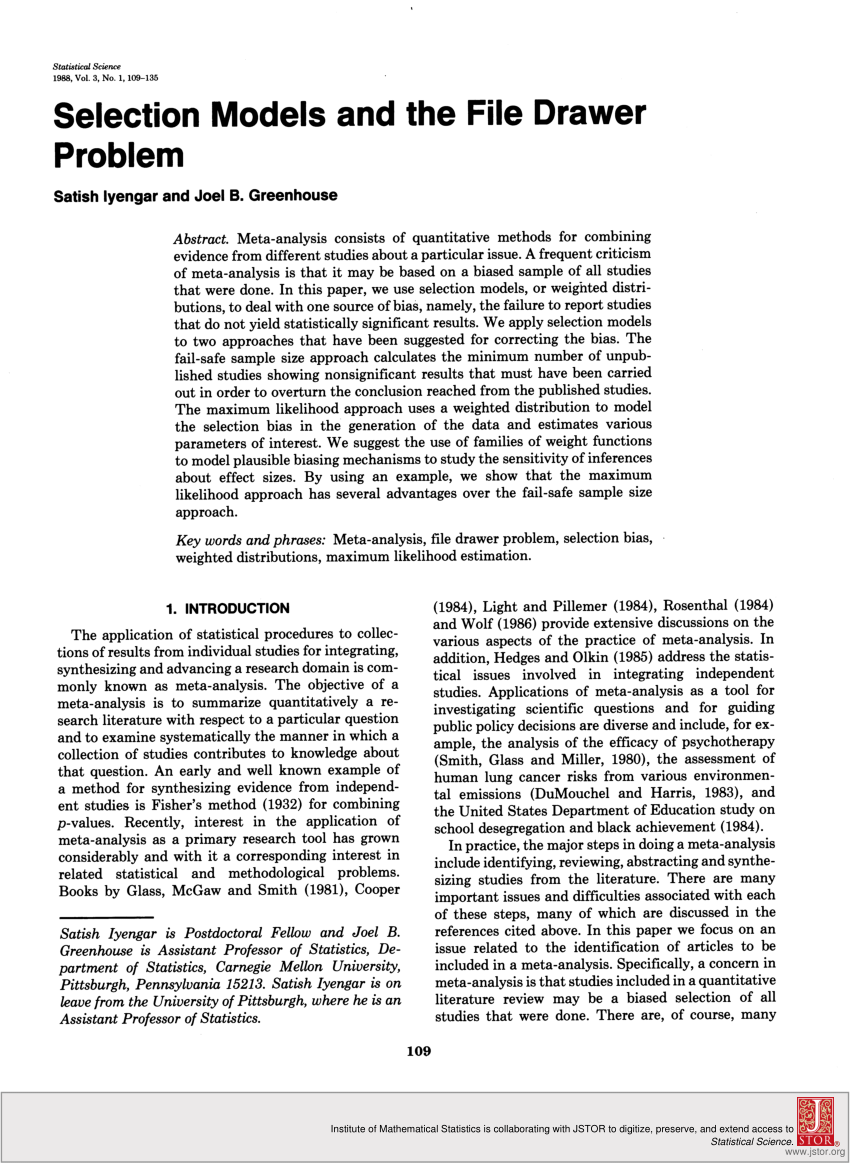
(PDF) Selection Models and the File Drawer Problem

File drawer talk
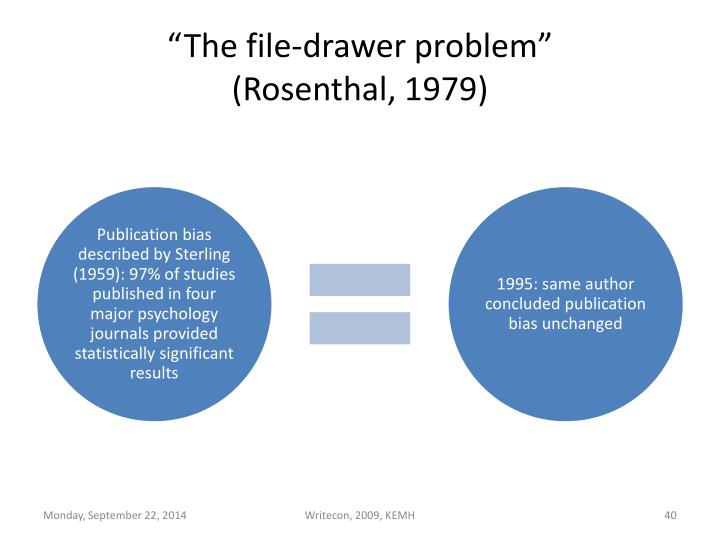
PPT Declaration of Helsinki PowerPoint Presentation ID4691236
![[PDF] Using the Comparative Method in Democratic Theory A Solution to](https://i1.rgstatic.net/publication/352539888_Using_the_Comparative_Method_in_Democratic_Theory_A_Solution_to_the_File_Drawer_Problem/links/61a685cc85c5ea51abc0ea39/largepreview.png)
[PDF] Using the Comparative Method in Democratic Theory A Solution to

PPT Formative assessment in mathematics opportunities and challenges

file drawer problem

What does filedrawer problem mean? YouTube

File Drawer Problem Fragility Vaccine
Web The File Drawer Problem Is A Phenomenon Wherein Studies With Significant Results Are More Likely To Be Published (Rothstein, 2008 ), Which Can Result In An Inaccurate Representation Of The Effects Of Interest.
Are The Results Statistically Significant?
This Term Suggests That Results Not Supporting The Hypotheses Of Researchers Often Go No Further Than The Researchers' File Drawers, Leading To A Bias In Published Research.
Web The File Drawer Problem (Or Publication Bias) Refers To The Selective Reporting Of Scientific Findings.
Related Post: